

 WoW Midnight
 The Burning Crusade
 Mists of Pandaria
 WoW Classic Era
 Path of Exile 2
 Path of Exile 1
 Diablo 4
 Diablo 2
 Arc Raiders
 Destiny 2
 Where Winds Meet
 Final Fantasy XIV
 Last Epoch
 Dune Awakening
 Counter Strike 2
 League of Legends
 Valorant
 Monster Hunter Wilds
 Marvel Rivals
 Once Human
 New World
Warcraft Isn’t Just an MMO Anymore — Blizzard’s Bigger Plan for the Future

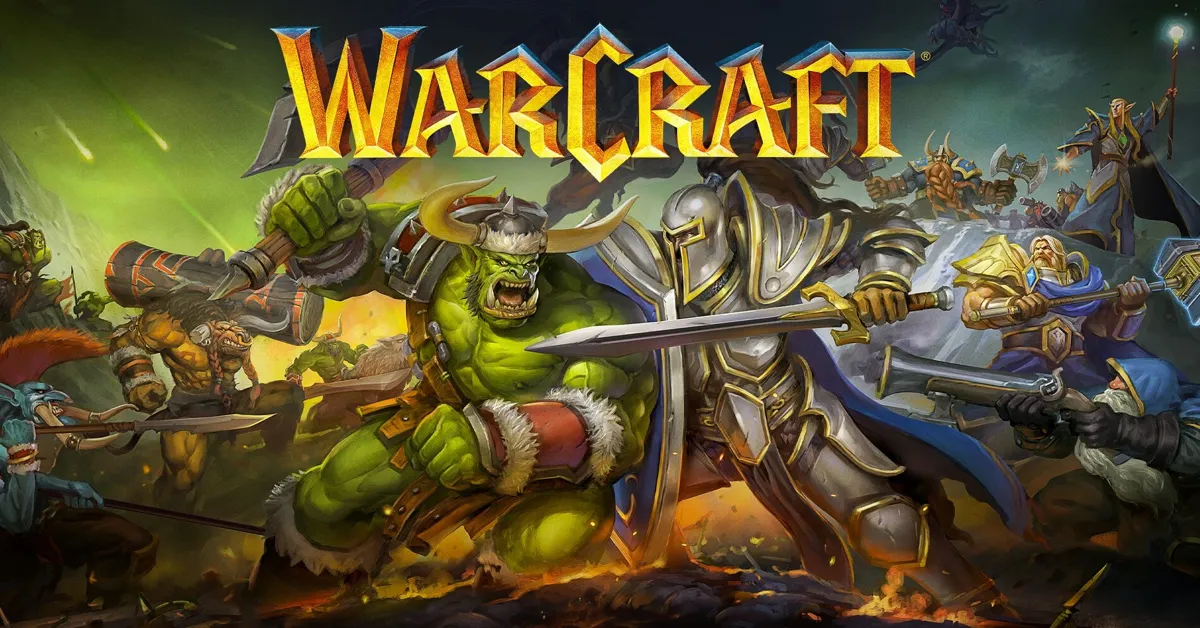
Blizzard’s Executive Producer Holly Longdale and Senior Game Director Ion Hazzikostas recently appeared on The Game Business Show to talk about something bigger than just the next patch.
They talked about the future of Warcraft itself.
And if there’s one takeaway from the interview, it’s this:
World of Warcraft is no longer being treated as just an MMO. It’s being positioned as a long-term entertainment universe.
WoW’s Future – Developer Talk (Video)
Warcraft Is Bigger Than an MMO
At the center of the discussion was the idea that Warcraft as an IP has been historically underutilized.
Holly Longdale believes Warcraft has enormous growth potential beyond its traditional MMO roots. The goal isn’t to shrink the game — it’s to expand what Warcraft represents. A broader vision. More access points. More ways to engage.
Ion Hazzikostas echoed that confidence, saying he believes Blizzard’s best years are still ahead.
There was even a candid moment about branding. Chris Metzen previously worried that the name “Warcraft” might sound intimidating to new audiences. Holly pushed back on that, noting that players don’t hesitate to jump into franchises like Warhammer — so why should Warcraft be treated differently?
The takeaway? Blizzard isn’t afraid of the name. They want to build on it.
Designing for an Aging Audience
Twenty years ago, World of Warcraft had a reputation:
You needed endless free time.
That’s no longer realistic.
Blizzard openly acknowledged that many players now have careers, families, and limited gaming hours. The solution isn’t removing depth — it’s adding breadth.
Features like housing are designed as flexible engagement systems. You can log in for ten minutes. Or you can spend an entire weekend building something creative. It doesn’t demand a fixed time commitment.
WoW is increasingly being described internally as a “third space” — not just a game, but a place players can socialize, roleplay, relax, or compete depending on what they want that day.
The philosophy isn’t to change what WoW is. It’s to make sure it offers something for everyone.
Delivering Content Faster (Without Burning Out the Team)
One of the biggest shifts discussed was structural.
Blizzard’s WoW team is no longer organized around one single expansion at a time. Instead:
Separate teams work on different expansions simultaneously
A dedicated live content team handles patch cadence
A separate team focuses entirely on housing
Future expansions like The Last Titan are already well underway
The result?
Midnight will release just 18 months after The War Within, marking the shortest gap between expansions in WoW history.
But perhaps more importantly, Ion emphasized that this is being done without crunch.
No mandatory weekend work. No emergency late-night pushes. The studio views WoW as a long marathon, not a sprint.
That’s a meaningful cultural shift from how expansions were delivered a decade ago.
Working With Microsoft
Since Blizzard’s acquisition by Microsoft, many players have wondered how much influence the parent company would have.
According to Holly, the impact has been mostly positive — and surprisingly hands-off.
Blizzard teams now collaborate more closely with other Microsoft-owned studios like those behind Elder Scrolls and Minecraft, sharing knowledge and technical expertise. But creatively, Blizzard still feels autonomous.
Holly even noted that, day-to-day, they don’t feel Microsoft “in the room.”
That suggests long-term stability rather than aggressive oversight.
Classic: From “No Changes” to Creative Experimentation
When WoW Classic first launched, Blizzard adopted a strict “no changes” philosophy — even replicating old bugs for authenticity.
That didn’t last.
As Classic evolved, the team realized players didn’t just want preservation. They wanted evolution.
Now we have:
Hardcore servers
Experimental seasonal content
Multiple parallel Classic versions
And full progression tracks like TBC Anniversary
Classic players and Retail players often behave very differently — and want very different things. Blizzard now designs with those differences in mind.
Classic isn’t a museum piece anymore. It’s a living branch of Warcraft’s ecosystem.
What This Really Means for Warcraft
The most important shift isn’t any one feature.
It’s mindset.
Blizzard is positioning Warcraft as:
A long-term entertainment ecosystem
A franchise with multiple entry points
A platform capable of both hardcore progression and casual creativity
A game that respects players’ time
A studio culture focused on sustainability
Housing. Faster expansions. Multiple Classic branches. Standalone modes. Broader experimentation.
This isn’t about chasing trends.
It’s about making Warcraft flexible enough to survive another 20 years.
CONCLUSION
For years, players have debated whether World of Warcraft was past its peak.
According to Blizzard’s leadership, the opposite may be true.
The company believes its strongest era is ahead — powered by better team structure, faster delivery cycles, sustainable development practices, and a much wider vision for the Warcraft IP.
WoW isn’t shrinking.
It’s expanding sideways.
And if Blizzard executes this vision properly, Warcraft in 2026 and beyond may look very different from what it was in 2004 — but still unmistakably Azeroth.